Wednesday, April 7, 2010

Piedmont Country Club Wedding, Haymarket Virginia


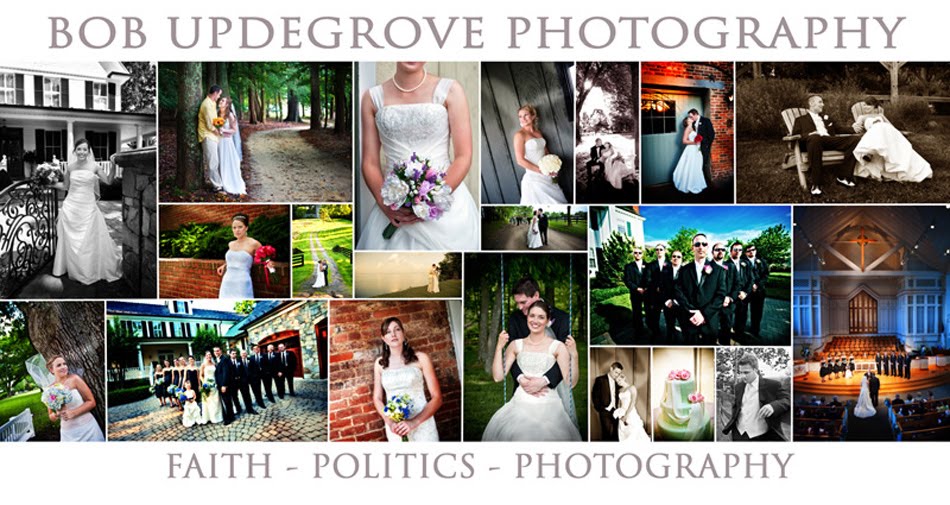
I recently photographed Brandon and Laura's wedding at the Piedmont Country Club in Haymarket. This was my first wedding at Piedmont and I have to say that I was impressed with the place. They did a nice job with their service and the venue worked pretty well for photos. For those looking for a nice spot for a wedding just outside Loudoun that probably does not come with the Loudoun prices, take a look at Piedmont.

Thursday, April 1, 2010

News Alert: The Left Hates George Bush

I find this video to be pretty nauseating, but it is a reminder of the rhetoric used by the left in describing George Bush. People in the press didn't seem to have a problem with it back then. Now, with their man Obama in office, it is a different story. Now if you criticize the president, you are considered a racist or unpatriotic or an intolerant hater or a terrorist. The sentiment from the right toward Obama is pretty similar to the left's view of Bush, but pretty safe to say the right has a bit more class in their use of words (be warned there are some inappropriate words used on some of the signs in the video).

Tuesday, March 30, 2010

Easter

There are any number of beliefs or issues that various Christians consider to be most important to the faith. Some emphasize social justice as defining the gospel (personally I would run fast from anyone who falls in this group), some believe strongly in rituals, and some place a lot of emphasis on "faith", as though faith was the targeted end, or at least they are hesitant to define who or what is the object of their faith. I believe that the absolute essential tenant of the Christian faith has to be the resurrection of Jesus. If someone claims to be a Christian, but denies or downplays the significance of the death and resurrection of Jesus, they are standing on very shaky ground. If people claim that the gospel (or good news) revolves around Jesus' teachings about taking care of those less fortunate or about loving thy neighbor, and they skip over the death and resurrection of Jesus, they are completely missing the gospel.

Scripture and Jesus himself are both very clear in telling us why Jesus came to dwell among us here on earth. First of all, Scripture and Jesus are clear about who Jesus is: God himself. It is difficult to reconcile the concept of Jesus as a great teacher or as a prophet, but not God. How could someone who was so clear about His identity, to the point of being stoned for blasphemy, be given those titles (teacher, prophet) if He was not God? Delusional maybe. A liar perhaps. Or He has to be who he claimed He was. A great teacher would not purposely mislead those he is teaching. A prophet would point people to someone greater. Jesus was clear: I and the Father are One. No one comes to the Father but through me.

The resurrection is significant because it was Jesus dying for our sins, bearing the full weight and payment of penalty for those sins, so that we might have eternal life with God. This is the gospel: that God so loved the world that He gave His only begotten Son . . that whosoever would believe in Him shall not perish, but have eternal life (John 3:16). It's all about our separation from God, His desire to be in relationship with us because of His love for us, to the point of allowing His own Son to die on a cross as a full payment for the sin that separated us from God. It is up to us individually to accept this gift. No one else can do it for us, there is nothing we can do to earn it.

This Easter, please consider these words. Consider your own relationship with God. Have you accepted this gift, this salvation, that God is offering to you?

Photography 101: Session 04

Before I go any further, I mentioned depth of field a couple times in previous sessions. Depth of field is another function of aperture, as well as the focal length of your lens. Macworld recently posted an excellent article that describes depth of field in a much better way than I ever could. I would highly recommend taking the time to read through it if you are interested in learning more about this important tool.

So before we leave the subject of exposure, which has been our subject for the first three sessions, we need to go over one more exposure function in your camera. By now you should know that your camera has a built in exposure meter. This meter will analyze the lighting within the scene as you point your camera toward your subject. Based on that light, your camera will determine what it believes to be the proper exposure (if you have it set to one of the auto exposure modes). It will also tell you in manual mode, but you have to manually make the aperture and shutter speed selections. But depending on your subject, the auto exposure can be fooled. There are ways to control how your exposure meter is reading the light.

Your camera might give you up to three different ways to meter a scene: 1) multi-segment, 2) center weighted, and 3) spot metering. Multi segment usually divides up your meter into 5 or 7 sections. When you point your camera toward your scene, the camera is actually making calculations based on the lighting it reads in each of those 5 or 7 sections, and then averages them out into a proper exposure. This, in most cases, is what I would recommend you set your meter to. It is probably the safest setting. Center weighted takes the exposure reading based on what is in the center circle of the viewfinder. Let's say you have a person in the shadows with brightness all around them. Since the person is the important part of the image, you might want to use center weighted metering, point your camera with the person in the center, and take your exposure based on the light that is falling just on that person. Your meter is ignoring all the other light in the scene. In this situation the person would then be more properly exposed, but all the bright area will get blown out. The third metering method, spot metering, refines the metering even further. The metering is based on a smaller "spot" in your viewfinder. If you wanted to meter the light falling right around a person's eyes, you could use spot metering to get your meter reading from that small of an area (depending on how close you are and what lens you are using), getting a more precise reading.

I shoot mostly in multi-segment metering, largely because I am always afraid that if I change it to spot I might forget to turn it back, potentially giving me exposure readings that I don't want. As I say this though, I keep thinking I don't utilize these other metering options as much as I should.

One more consideration that fits this discussion: most d-slr cameras have a button near the trigger button that allows you to lock in an exposure. If you are using spot metering or maybe even center-weighted, and the area you want to meter is not in the center of your viewfinder, you might want to point your camera so that the area you want to meter has the spot on it, and while you are taking your reading (by holding down the trigger button half way), you hold down this exposure lock button. That keeps your metered exposure reading locked in while you recompose your scene. You need to keep that button pressed while you shoot your image.

Next session will get into something different: indoor photography and flash.

Monday, March 29, 2010

The Entertainment Reform Bill

For decades now there have been a small but growing number of producers, entertainers, artists and directors (PEAD) who have made a disproportionate amount of revenue compared to the millions of other workers within the entertainment industry. Some of the PEAD rank as mega-stars, bringing in an income through fees and royalties that most people would agree is excessive. For decades this disparity has created a two class system within the entertainment world. At the same time fees paid by the general public have risen to a point where many Americans simply cannot afford this kind of entertainment. Millions of Americans are denied one of the most basic of rights: entertainment. It is imperative that Congress step in, take over the entertainment industry, and bring justice for those Americans who have lived without entertainment, especially the young. The Entertainment Reform Bill will introduce the right tools needed to make this dream a reality. This is just the beginning.

First, PEAD who see personal annual revenues over $250,000 will be levied a special tax rate investment that is 15 percentage points above all other Americans. Those PEAD who see personal annual revenues in excess of $1 million will incur a flat $250,000 per million above their normal tax investment obligations. These additional investment charges will help provide a more equitable entertainment community. (Parenthetically, we have not figured out a way to increase the revenue of those who earn the least, so for now we will resort to taking away from those who make the most, providing equity within the industry).

The second phase of this bill will be the start of the Rural Entertainment Mandate. Mega-star entertainers typically perform only in venues that hold over 10,000 people, which limit these kind of performances to urban areas. Rural Americans are denied this most basic right of entertainment. Under this bill, mega-star entertainers will be required to perform a minimum number of performances per year in venues that hold no more than 250 people and are in areas designated as "rural" by the Entertainment Commission.

Third in this bill will be a mandated limit in ticket prices. Entertainers must have their ticket prices approved by the Entertainment Price Structure Commission. This includes concerts, theater performances, and movies. Excessive pricing will incur a severe tax penalty.

Royalties to private individuals will be abolished. Any recognized royalties will now go into a relief fund that encourages and teaches conservative policies and ideals. For far too long this minority group within the entertainment industry has been treated unfairly, long denied of any equitable opportunities for success. The fund will help rectify years of abuse and intolerance.

Award shows will also be abolished. Americans have long been subjected to this exercise in excessiveness and self-absorption. These shows have served as an annual "in your face" event that divides America into a collective of those who have and those who have not. Additionally, no one should ever be signaled out for displaying excellence.

It is important to understand that with these measures, the federal government is not interested in running the entertainment industry. This is important legislation however as the federal government continues to make itself a larger presence in the lives of individuals, making life better for all. We must all do our part.

Sunday, March 28, 2010

A Free Market

Dr. Paul Kengor and Dr. Shawn Ritenour, both of Grove City College, have a nice dialogue about the free market, economics, socialism and the Bible. Very relevant for today. An excerpt below:

"The foundation of economic activity and policy is private property. All action requires the use of property and all economic policy is about how people can legally use their property. To benefit from the division of labor, we must be able to exchange our products, which requires private property. Private property is definitely Scriptural. The Bible explicitly prohibits theft, fraud, moving property barriers, debasing money, violating labor contracts, as well as coveting. These prohibitions apply to both citizens and rulers. In my text, I apply this conclusion to issues such as confiscatory taxation, government subsidies, business regulation, and monetary inflation."

Friday, March 26, 2010

Photography 101: Session 03

Summarizing Aperture Priority, you set the aperture you want and the camera will automatically determine the proper shutter speed for what the camera believes is the proper exposure. If you select the largest aperture your lens offers, you are optimizing your shutter speed relative to the available light. You are allowing the most light to come through the lens, which in turn means less light has to come in through the shutter, resulting in a faster shutter speed. In most cases that is what you want when shooting outdoors. Keep in mind that Program (Auto), Aperture and Shutter Priority modes are all auto exposure modes. If I go out on a fairly bright day and shoot in Program mode, that mode might automatically set my aperture to f8 and shutter to 1/500, and that might be fine for what I am shooting. But what if I want or need a faster shutter speed? Personally I would change my mode over to Aperture and set the aperture to the fastest (most open) I can get it, which for most consumer lenses would be either f4 (2 stop difference) or f5.6 (1 stop difference). That will automatically change my shutter speed to the fastest I can get under the circumstances, or in this case, either 1/2000 at f4, or 1/1000 at f5.6. I personally almost always shoot in Aperture Priority and leave my aperture wide open. So, what about Shutter Priority?

Shutter Priority: Shutter Priority behaves just like Aperture Priority, only now the shutter speed is being set by the user and the camera determines the aperture. Now let me say right up front that I cannot think of a time in my life when I shot in Shutter Priority. I have yet to come up with a need to do so, and my guess is you will not have a reason either; so I am not going to spend much time on it. The only reason I can come up with for why someone would want to shoot in Shutter Priority is if they wanted to shoot a series of images at the exact same shutter speed. Not sure why though. My feeling is if you want to control the shutter speed, do it within Aperture Priority. It will basically give you the same results. Remember, these are both auto-exposure modes, so the resulting exposure will be the same. In Aperture Priority, if you wanted to dial in a specific shutter speed, just adjust your aperture until you get that shutter speed reading. I have found that to be just as quick and easy to do than setting it over to the Shutter Priority mode. My advice: don't worry about this mode.

So that brings us to one last exposure mode: Manual.

Manual Mode:  When you point your camera toward what you are about to photograph, your camera's exposure meter will analyze the scene and determine what it believes to be the proper exposure. In most cases it will be pretty accurate. There are times however when your camera meter will be fooled. Usually it will happen in bright situations, like on the beach or in the snow, or when it reads the sun reflecting off of a window. The camera will read this as way more light than what is really there and will tell the shutter to close down quicker than it should, resulting in not enough light exposing the image. You end up with a dark image.

Let's say you are on the beach and it is really bright out. Now let's say that the proper exposure for these particular conditions would be f5.6 at 1/1000 of a second shutter speed. At the moment we don't know these numbers because we have no way of measuring them up front. We point our camera towards the water and white sand and the camera interprets the exposure as f5.6 at 1/2000 or maybe even 1/4000. In other words it believes there is a lot more light than there really is, so it is not letting as much light in through the shutter as the scene actually requires. The result will be a dark, underexposed image. This is often why snow looks dark blue or our beach pictures look overly contrasty. Not enough light was making it through the shutter to properly expose it. Since the camera is giving us a reading of let's say 1/2000, we need the shutter to stay open a bit longer. So let's try 1/1000. Now, if you bounce around between Program, Aperture or Shutter Priority modes, you will get the same exposure because they are all auto modes. So if you are in one of these modes and you go to set your shutter to 1/1000, you will unintentionally also be changing your aperture to f8. Effectively, nothing has changed in regards to your exposure. To gain control over your exposure settings, you have two options: 1) manual mode, or 2) exposure compensation dial.

If you set your exposure mode to Manual, you will have to set both your aperture and your shutter speed manually. If you know from looking at the monitor on the camera that the settings f5.6 and 1/2000 were too dark, you could then manually set it to f5.6 and 1/1000 and see what happens. For good measure you could even take another shot at f5.6 and 1/500.

Exposure Compensation (EC): Many cameras have some kind of exposure compensation dial. I use mine quite a bit. This dial allows you to stay in Aperture Priority and override what the camera is picking as the shutter speed. Oftentimes I will shoot in a situation where I know the camera is not reading the exposure correctly. It can be off by a full stop, either overexposing or underexposing the image. The EC dial lets me very quickly dial in a compensation for that, either up or down. If the camera is telling me to shoot it at 1/1000 but I want it to fire at 1/500, rather than switching over to Manual mode and dialing in everything manually, I can just turn this dial, basically fooling the camera to accept a 1/500 shutter speed.

I realize that all of this sounds like work, and if it is new to you it probably also sounds confusing. The best thing you can do is hold your camera, read through this and play with the settings. See how the different settings affect your exposure, or not. It's one of those things that the more you use it, the more natural it all feels. And you gain control over your camera, especially in difficult situations. I could tell you up front what to set your camera at in various locations, but that information might not entirely accurate, and you wouldn't understand why. Hopefully this will help.

Coming up next will be a wrap up of exposure, including the different ways your exposure meter works; followed by indoor photography with flash.
Thursday, March 25, 2010

We've Been Here Before

I remember the late 1970's. It was post-Viet Nam. American morale was brought down by an apparent failure in that war. As troops returned home, they were spat on in some cases, and given very little respect by most Americans. Iran was holding American hostages. Jimmy Carter was president. Interest rates were at 21%, inflation rose to 11%. Gasoline prices spiked and, at times, was scarce. A military attempt to rescue our hostages in Iran failed. The Olympics, a usual source of national pride, was boycotted by America during the 1980 summer Olympics in Moscow. American pride . . largely gone. Few people flew the American flag. In my lifetime, that period was a low point in terms of the American spirit and morale.

Then came Ronald Reagan. Many conservatives have an affection for Reagan because, to them, Reagan represented a true conservative in his policies and ideas. I remember Reagan most for the complete 180 he orchestrated in the American spirit. It was night and day. Carter leaves, Reagan enters, and Americans are once again proud to be an American. In many respects though, the economic circumstances America was in during Reagan's first year or two were still dire. Unemployment continued to grow. But three things were happening: 1) tax cuts were implemented, 2) Reagan made it clear that the government was getting out of the way so people could prosper on their own, 3) Americans responded with unprecedented economic growth.

Reagan made it cool again to be an American. He was not just a great leader who connected well with people, he continually spoke with conviction about the greatness of America and the American ideal. He saw government often being the source of our problems rather than the ever present answer to those problems. It is a stark contrast to today, when our political leaders look to the government as being the only answer. Problem with health care . . the government will take it over. Problem with your car . . the government will take it over. Problem with your bank . . the government will take it over. Reagan would have none of that. You have a problem . . fix it yourself. Have a problem . . what am I doing that is making your life miserable?

Today, just like the 1970's, we need another Ronald Reagan. We need someone who speaks with great affection for America, not taking every opportunity to rip it apart or transform it into Europe. We need someone with a clear vision to strip the federal government of year's of accumulated acquisitions it has no business owning. We need our country back in the hands of the people, not unions, not big business, not George Soros. We need someone who inspires us with, not the greatness of government, but of the greatness of Americans and our American Constitution. Boy I miss Reagan.

Wednesday, March 24, 2010

Photography 101: Session 02

A recap of Session 01: You want a photo that is properly exposed. To get that, many people set their camera to "program" (or "auto") mode. This lets the camera determine what the proper exposure should be, given what you are pointing your camera towards. The camera is automatically setting two things: aperture and shutter speed. In program mode the camera makes those choices for you, which in many cases might be fine. If you are happy with your photos in this setting, there might not be a reason for you to change it. But if you want to take a bit more control over your camera, understanding how controlling aperture and shutter speed will impact your images, you will be able to experiment with greater flexibility and get much more out of your camera. You can do this by simply using one of the other exposure modes your camera hopefully has: aperture priority, shutter priority, or manual. For more information on that, please refer to Session 01. So when and how should you use these other exposure modes?

Aperture Priority: As I mentioned in Session 01, I use Aperture Priority just about all the time when shooting outdoors. Aperture is controlling how much light is coming through the lens. The more light you have coming through the lens, the less light you need to come through the shutter on your camera. This of course is all relative to how much light is available, but the dynamics don't change . . more light through the lens = less light needed through the shutter. You control that light coming through the lens by opening and closing the aperture. I prefer to just keep my aperture as wide open as possible in most situations, so I set my aperture to 2.8. In Aperture Priority, once I set my aperture to what I want (usually 2.8 with my lenses), the camera will now determine the shutter speed for me to get the proper exposure. Because I am letting in the most light possible through the lens, I should be getting the faster shutter speed possible. A faster shutter speed lets less light in through the shutter than a slower shutter speed.

So why do I shoot in Aperture Priority? The main reason is that it optimizes my shutter speed. As long as I have my aperture wide open, I can relax a bit knowing that I am shooting at fast shutter speeds. In most cases a fast shutter speed is a good thing. If people are blinking or moving, a faster shutter speed gives me a better chance of getting a good photo. If I am having a difficult time holding my camera still, a faster speed will help counteract that. This is all especially true when the light is not that strong. If your aperture is not open all the way, you are working against yourself by not optimizing your settings.

Let's say you are outdoors and it is early evening. The sun is setting. Your camera is set in Aperture Priority with an aperture of 8.0 and you are getting a shutter speed reading of 1/30 of a second. That might work for you, but there is a chance that at that shutter speed, you might not be able to hold your camera still, resulting in blur. So now that you have control over your camera, change your aperture from 8.0 to 5.6 to 4.0. That is two stops. Remember those are fractions, 1/4 is a larger number than 1/8, or in other words, you are opening the aperture up, allowing more light to come through the lens. To compensate for that additional light, your shutter speed will need to change: from 1/30 of a second up to 1/60 and up to 1/125. Those are two stops to compensate for the two stops change you just made with your aperture. Because you are in Aperture Priority, as you change your aperture the camera will automatically adjust your shutter speed. Under these conditions you will have better chances of a good photo at 1/125 shutter speed than you would have at 1/30 of a second.

Let's say that 1/125 is still too slow for you considering what you are trying to photograph. Now what? Well your one last option (besides adding a flash) is to up your ISO. Let's say your ISO was set at 200. If you change that to 400 (or one stop), your camera will now adjust your shutter speed up to 1/250 of a second (a one stop change). Raise you ISO up to 800 and you gain another stop, or 1/500 of a second. You have to be careful though, because with each raise in ISO you are possibly introducing more digital noise to your image. Given the choice of a blurry bad image vs. a good one with some noise, I would opt for the noise. Sometimes that can be fixed with software after the fact.

Aperture also affects the depth of field in an image. I won't get into this much here except to say that this is largely affected by the focal length of your lens. Longer focal lengths coupled with a wide open aperture is how you achieve portrait images with a blurred out background. Wide angle lenses will give you a more even focus of foreground and background, good for group photos and landscapes.

Next session will pick up on Aperture Priority and then go into Shutter Priority. Please feel free to post comments or questions.